



Wildlife conservationist and scientific communicator Francisco Bassó Medel wants everyone to know: Bugs are cool, so don’t you dare smash ‘em.
The self-proclaimed “bugologist” (or bichólogo in Spanish) learned that efforts to track declining wildlife populations have been severely underfunded in the bug department. The 26-year-old believes that’s largely due to an unfair stigma humans have against invertebrates.
On a mission to teach people the beauty and importance of bugs and other invertebrates, Bassó Medel began working for the Living Coast Discovery Center in Chula Vista to give free, guided hikes themed around spotting bugs and identifying native plant species and school programming. He stopped working at Living Coast earlier this year, but continues to collaborate with the center by designing merchandise sold in the shop, and partnering with staff for some hikes and events.
Bassó Medel was born in Chula Vista and raised in Tijuana. He said his new calling there is to help close a gap in conservation efforts beyond the border in Baja California.
inewsource recently sat down with Bassó Medel at the Rice Canyon Trail in Chula Vista to discuss the challenges South Bay’s wildlife face as human activity continues to destroy habitats — and how a focus on helping bugs could heal the ecosystem.
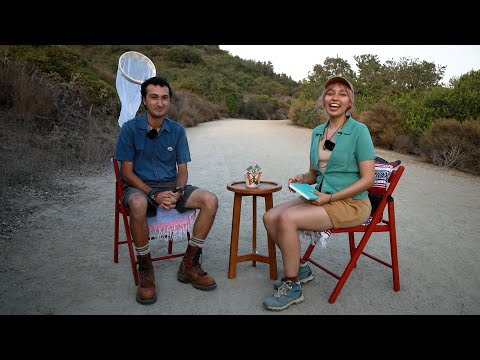
First and foremost, what would you say your focus is in terms of your education as well as what you’re educating people about?
I did my undergrad in UC Davis as a wildlife conservation biologist, mostly focused on vertebrates, so that is mammals, fish, reptiles, and birds. But then after graduating, I realized that most of the animals that are under most of the threat of becoming endangered or going extinct are the little ones that we usually don’t think about as much. So I wanted to focus on that. And because there’s not a lot of people who know about them, I wanted to focus on educating the public about those ones, which includes bugs, amphibians, bats — some tiny, tiny mammals that most people see sometimes in documentaries, but they don’t really know that they actually exist here in their backyard.
Can you tell us a bit about the different types of native species that are concentrated in the South Bay?
The South Bay is like San Diego: a super diverse part of the U.S. Actually, San Diego is the most biodiverse county out of all the continental U.S., so South Bay is no exception here. We see a lot of different ecosystems. For example, right now we are in a canyon. Not only that, but we share the environment with the coastal sage scrub, which runs from here all throughout Chula Vista into the bay. Because there’s many different eco regions, there’s a lot of diversity in everything — all vertebrate groups, bugs and especially plants.
You became very interested in invertebrates because people don’t really pay attention to the small ones, right?
My goal is to make people interested in preserving all species, to just work in conservation, to preserve life. But that also means educating people on preserving all of it because as it turns out, most of the diversity in earth belongs to those underrepresented groups of animals, mostly, invertebrates. Arthropods, like bugs, spiders, crustaceans, represent most of the animals here. If we’re wanting to preserve them, we need to preserve them, because they’re disappearing at a rate that we cannot even count just because it’s going by so fast and because they’re so small.
Do you have any examples of some of the native species that we have here in the South Bay?
We get a lot of different types of bats that are really cool, and a few amphibian species. But of course, the big diversity comes in arthropods. For example, bees are super diverse here. Just in San Diego County, we know that there are about 650 different species of bees. Most of the bees that we see are the honeybees, which aren’t necessarily a good thing for nature. We’re gonna go into that later, but all of the other ones that are here are specialists on the different types of plants that are here. We really need that big diversity. Not only that, but we get tons of different types of beetles. Probably the most diverse group on earth of any animal are beetles. Another big group right here are butterflies. We estimate that there’s about 150 different butterflies here. And then many, many more moths, which is the group where butterflies come from.

And you actually have some samples for us— for you to share with us today.
Yeah, of course. This is a white, yellow faced bumblebee. Bumblebees are gonna be one of the most important pollinators here because of the way they fly. They bumble a lot. They’re, they’re, they’re gonna be doing a type of pollination, where they kind of spread the pollen everywhere, and the flowers that they pollinate need that type of pollenization. They’re very, very unique, of course, in their size. They’re one of the bigger bee species here. This is not the biggest species here. There’s a few bigger, but you can see they come in all shapes and sizes. This one is, of course, the yellow and black that we usually see in bees, which is a coloration to warn, that they can sting, they can be dangerous, or to mimic, that they might be dangerous. They come in all shapes and sizes, and this is one of the, the bigger ones. But I can bring you some examples of some smaller ones.
Yeah, yeah.
The best way to know about what’s in the region is to collect them and to preserve them into collections. Here I have a little box of some examples, some bees that have been collected here through California. But many of these I collected here in the South Bay. You can see there’s a few different big bees, which are bumblebees. There’s other ones that are, for example, these ones, it’s kind of hard to see, but they are green, and these are called metallic green sweat bees. All bees have been known to eat sweat, once in a while from humans, but those ones got the name sweat bees. These two are males, you can see because they have a striped tail. You can see they come from this tiny, tiny size. This super tiny bee over here. Some are so tiny, we call them fairy bees, and some are huge. I don’t have the biggest one here, but some might be double the size from one of these bumblebees. They’re called carpenter bees, and they will make holes into wood.
Can you tell us about what kind of native plant species are useful for organisms like this? Which ones do we need more of? Which ones are endangered?
Here in San Diego or in the South Bay, we get a lot of endemic species, meaning that they’re only found here, that not only goes for animals, but also for plants. There’s a lot of agaves that only grow here, like Shaw’s agave. That is one that if you have it, it’s gonna be pretty cool because it’s gonna attract a lot of bugs in the day and a lot of bats in the night. That’s gonna help the local diversity of pollinators. Some other shrubs that people like — or wild flowers: You can get California poppies, you can get California sunflowers. These flowers, both of these species are open, and a lot of these smaller bees like that because they can land on them and even sometimes, rest on them for a while, like for a night. Other ones that you can also have is white sage or black sage. Bumblebees like those, Also, all types of monkey flowers. Here we have a few different species. Those ones serve for bigger species that usually cannot land on the flower because they’re too big. So like, some species of larger bees, some moths and some hummingbirds, too.
Can you tell us about which ones are endangered or close to being endangered?
In the South Bay, as I’ve said before, we have many different ecosystems, and there’s a lot of animals that are only found in an ecosystem that is going endangered. So all of them are also going endangered. These are the marshes or the wetlands. Here in San Diego, we have a few, but they now only are about 10% of what they used to be, so we have basically decimated most of it, 90% of it. Of course, all the species of plants and animals that live there that are only specialized to live there are becoming endangered. Like the clapper rail, that is one of them, that is a small bird that only nests in the reeds that are in these marshes. And so they’re becoming endangered too. A lot of bugs are becoming endangered too because their host plant only lives in these specialized systems. And these plants have evolved to take up a lot of salt water, so you can’t put them near normal water or without water, because they will not survive. One of these ones is called a salt marsh moth. These moths rely on plants that are near the water, near the salt water, for their babies to munch on the plants. I actually have a sample of that. I can bring it up.

Right here, I have two lepidopterans, which is the group that has both butterflies and moths. This is the salt marsh moth. This is how I found it already. He passed away in one of these marshes, but when they are babies, they don’t look anything like this. They actually look very, very dark, yeah, I, I believe, almost black in color, kind of dark brown. They’re very, very fluffy. This one has, I pinned it as it, passed away, but usually has the wings open. They’re really pretty, they’re half orange-colored in the bottom. They don’t live long. They live for a few weeks, two months, depending on the species. And during the time when they fly, when they are adults, the only thing they do is mate and lay eggs in these marshes. This one right here is very special. It is not endangered. but also that doesn’t mean that it might not become endangered in the future, or maybe we don’t even know if they’re in danger because they’re not as pretty as other animals or as other bugs. So there’s not a lot of research going into them.
Are you saying that there’s just not enough resources being put into even tracking how low the populations are?
Yeah, and it’s really hard working off arthropods, especially of these little guys that just get lost in all of these shrubs, shrubbery out here, because you have to trap them. To trap them basically means that you’re gonna kill them. Preserving the species makes it harder because you have to basically kill some of them so you can know which ones are there. But just for scientists to get to this point, they have to go through so many different agencies that will give them money or not. Many agencies have the decision of, “Well, do I want to preserve this bird or this plant, or this bug?” Well, most people know more about birds or plants than they know of bugs. They will, of course, instinctively go towards the bigger, more colorful animals. And there’s nothing bad in that, we do need to preserve them. But the thing is, there’s too many different species of these little tiny ones that we know that are going endangered. We don’t even know how many of them are already extinct, or maybe we just discovered them and we already know they’re endangered.
People like the pretty ones and tend to like mammals. They don’t really care about the bugs or the non-aesthetically pleasing ones in general, not necessarily bugs. Bugs also get a bad rep. We have this propaganda against bugs that they’re all bad and they’re gonna crawl in your ear or something, and lay eggs and eat your brain or something. But, they’re not — they’re more scared of us than we are of them, for the most part. What reasoning do you give people to make them care about bugs?
They are as cool or sometimes even cooler than the ones that are huge, because you can fit all of that, all of what we are, an organism that thinks, that can move around, that can reproduce, all of that into less than an inch sometimes of a creature. And so just that is pretty cool. But also the huge diversity that there is of them, basically they’re tiny robots that will go into any ecosystem that is out there. They will eat almost anything. I think the different shapes and different adaptations that they have towards all of their different lifestyles make them all really unique and really cool.
The other thing is that bugs are necessary to feed the animals the predators that you do like, right?
Yeah. Well, a lot of animals depend on bugs. They’re part of the lower stages of the trophic cascade. That means that a lot of birds will eat them. A lot of reptiles will eat them. Some mammals will eat them, too. And of course, bugs will eat other bugs. They are part of what makes the plant energy or like the products of the plant become organic matter for animals to digest much easier. For example, I have these guys right here. These, you can see there’s a few of them. I have a few different life stages here. Some of them are babies, some of them are adults. These are red-shouldered bugs. True bugs like these guys have a proboscis, like a tube nose, and they use that to drink the sap out of plants. They’re excellent for basically transforming what usually would be a plant matter to an animal matter by just drinking the sap of these plants.

What is that little ball thing?
They have been sucking on these seeds that I found. I collected them with the seeds that they were drinking on. It seems that their whole life stage — or their whole life depends on drinking this out of these plants.
You were talking about the decimation of certain habitats, and as a result, certain species. What are the causes of these decimations of habitats?
Whenever we talk about conservation and the destruction of habitat, it almost always has to do with humans, but many different things pertaining to humans. So one of them is, of course, habitat degradation due to encroachment of cities. For example, back here we’re surrounded by houses. It is still a nature-rich area, but there are houses: the noise from the house, just contamination from maybe runoff from the water, maybe other chemicals going out into the air — all of those things that have to do with the cities being closer to nature or going into nature. Another one is pesticide use. In a lot of farmlands, the best way for us to produce as much food as we can, without it being lost to pests, is just to spray everything with very effective pesticides.
The bad thing is that it not only kills the pests, but also other bugs that are out there that have similar systems to the pests. For example, bees right now are really, really decreasing because of that. That is one of the main reasons. Another thing that also encroaches on the habitat and many times kicks the native species out are the invasive species. So they can come in many different shapes and forms. Some invasive species come in the shape of an infection that came with a different animal that wasn’t native to the region. And the infection then spreads into the habitat that wasn’t ready to resist that. For example, there’s a lot of amphibians that are now endangered because of a fungi — the chytrid fungi — that came from some frogs from Africa. Over there in Africa, they’re fine for their frogs, but over here our frogs are not made to sustain that. Actually, the biggest vertebrate extinction right now that is happening is of amphibians because of that. That’s just one example. There’s many more. For example, I talked about the invasive honeybee, which I actually have right here. This is the western honeybee found throughout Europe, Asia, and Africa. This is the female, this is the drone male.
Are those the usual honeybees that we see buzzing around? They’re horrible, too?
Well, they are not horrible. We do need them. We need them for crops because many of our crops are invasive species, too. It is kind of like needing livestock. We need it to survive.

I’m glad we’re talking about plants because you already know I really hate ice plants. How bad are these ice plants? And what are other plant species that are also invasive in this area?
Ice plants come in many different shapes and sizes. There’s a few different species that are invasive here, but none of the species are native to the area. And so all of them come from Mediterranean Africa. They usually get here through trade. People bring them. They think they’re cute, or they inadvertently take the seeds of a different plant or ice plants just with a little chunk, you can make them regrow. In the beginning it was thought that they were brought here to help with erosion. Usually we find them near the edges of roads and highways, stuff like that. And while it does hold onto the dirt, on top of the edges, it actually will only take up the water, which our soil doesn’t take as much water. It loses a lot. Eventually that soil becomes really eroded. So, the ice plant is not actually doing what it was supposed to do in the first place. It’s just making the soil even more, more dry, because these plants are succulent, meaning that they, they take up a lot of water, and as you can see, their, their leaves or their, their structures are really thick. So most of them, it’s just water. Basically taking all of those resources through a very large area, is not only creating erosion, but also not allowing a lot of other species to be there except for other ice plants.
There is one other horrible plant species.
Eucalyptus. Just like the ice plant, there’s a few different species here in San Diego. and we also brought them intentionally like the ice plant, because in this case, they grow up really easily. They’re from the outback of Australia, many different places back there. And over there, there’s also not a lot of water. So, they’re really good at taking up water and growing really fast. That makes not only the dirt around them here in San Diego very dry and not allow other plants to grow there, but it also makes it really hard for animals to just live around them. Because the animals that would eat them are koalas, and koalas are specialized for eating the eucalyptus. And as you might know, koalas sleep most of their day because the eucalyptus leaves. All of their energy is used up as digesting the toxins from their leaves. The leaves are really toxic, and they’re acidic. Once they fall to the ground, nothing eats them, and there’s nothing growing around them because they change the pH of the ground. The plants there don’t like acidic conditions in the ground. Overall, they’re not really good for the environment.
And eucalyptus trees are flammable, right?
Yes. There’s many different species that thrive after a fire, and many of them here in California do need a fire to thrive. There’s a few beetles, there’s some plants, there’s other things that need fire to go through. But the eucalyptus just increases the number of fires that we have here.
So what can we do to empower ourselves to fight against these horrible invasive species terrorizing our soil and our native species?
Definitely, invasive species are here to stay. It’s really hard to get rid of any of them, but especially these plants. For ice plants, there’s many things that we can do. For example, just removing them.
Rip ‘em out.
There’s some restoration projects coming around here in the area, not only in San Diego, but also in Baja California. They’re also super invasive over there because we have the same type of ecosystem, the same type of climate. And so just taking them out and not letting any parts of their roots stay there. Another thing that we can do is after removing them, we can also plant native species. There are some native species that can regrow on very, disturbed soil. So even after taking the plants out, you can put them back. There’s other succulents that will gladly take their place. Other cactuses, agaves, and many different shrubs, also.
These succulents would be the native ones, right?
Yes. We have a few really cool succulents. Actually, we have many, many endemic succulents here. We’re one of the counties that has the most.
And where can people find guidance for planting or even getting free seeds?
There are three different organizations that are doing great work here in San Diego. One of them is going to be the San Diego Bird Alliance. Even though they’re mainly focused on birds, they also focus on restoration events, on taking out trash from different sites, and basically just preserving the local ecosystem for everyone.
The other one that is solely about plants: the California Native Plant Society. They have different chapters. There’s one chapter for San Diego, and they will guide you through everything that you need to get your plants, on which plants do you want, depending on your garden space, depending on when you wanna plant them, or what species of pollinators you want coming to your garden. That’s really cool.
And then another one that focuses mostly on the bugs, in this case, mostly on the pollinators, is Xerces Society. They focus on invertebrate conservation, one of the few organizations that actually only focuses on the preservation of these species. And they have habitat kits, and so they will send you different plants, different seeds, so that you can plant them depending on where you live.
So moral of the story: We need to try our best to rip these ice plants out, sprinkle some native seeds there, attract pollinators and birds, and then you’ll have a whole ecosystem of native wildlife. It can happen in your backyard. For renters who might not have yard space or have permission to plant under their landlord, what can they do to feel empowered to try to make some type of positive impact?
It is difficult if you don’t have a lot of gardening space. You can always have raised garden beds and have as much diversity as you can of different plants, plants that go together with each other. You can also compost in your backyard or in your space. There’s gonna be compost types available for any type of living. By composting, you’re basically grabbing a lot of waste that we usually just go to the trash, putting it back into the soil. That will not only help benefit the plants, but also you will now have a big ecosystem of animals living in the soil, making it a living organism, too.
The Living Coast Discovery Center does have free composting classes for people who wanna sign up for that. I was in one of those. It was awesome. What work are you continuing to do with the Living Coast, as well as, what kind of ventures are you doing beyond the border?
I am now focusing more on just educating people on the other side of the border in Tijuana. A lot of it has to do with just letting people know that the animals in their backyard, they’re pretty cool and they’re not dangerous. You don’t have to just kill a bug on sight. You don’t have to kill a spider. You can just let it go and see its behavior. I want to focus a lot on that. With the Living Coast, I am focusing more on working with their gift shop. So with a lot of the items that I’m gonna be making, for example, some stickers, maybe some hats, some, some shirts, that all of them focus on native species of animals, most of them to the South Bay. I have some educational parts of them. Maybe it talks about the different species of bees that you can find here, or just seeing all the different types of snakes that are found here in San Diego.
You create all of this art on digital art, right?
Yeah. People won’t care or won’t preserve things that they don’t know that they exist. You need to get people interested in them, in these animals. Just as we are interested in big megafauna like coyotes or rattlesnakes or hawks here in San Diego, there’s a lot of other cool stuff here. We just need to look closer, and they’re there. They’re always there.
This interview was edited for clarity and brevity.
Type of Content
News: Based on facts, either observed and verified directly by the reporter, or reported and verified from knowledgeable sources.
